Introduction
Caustic soda, also known as Sodium Hydroxide (NaOH), is one of the most widely used industrial chemicals worldwide. It plays a critical role in industries such as pulp and paper, textiles, water treatment, alumina refining, detergents, chemicals manufacturing, petroleum processing, and food production.
As global industrial demand continues to grow, buyers increasingly prioritize product quality, supply consistency, and reliable logistics when selecting a caustic soda supplier. Whether purchasing bulk caustic soda for manufacturing operations or sourcing for international distribution, understanding quality standards is essential for ensuring process efficiency, regulatory compliance, and product performance.
This guide explains the key quality parameters of industrial caustic soda, including purity, moisture content, chemical specifications, packaging requirements, and documentation that importers and procurement teams should evaluate before purchasing.
Why Caustic Soda Quality Matters
Caustic soda is a highly reactive alkali that directly impacts production efficiency and product quality. Variations in purity or contamination levels can lead to:
- Reduced manufacturing performance
- Increased production costs
- Equipment corrosion or operational issues
- Product quality inconsistencies
- Regulatory and compliance challenges
For this reason, manufacturers and distributors often establish strict procurement standards and work only with qualified suppliers capable of delivering consistent specifications across multiple shipments.
Available Forms of Caustic Soda
Different industries require different forms of caustic soda depending on handling requirements, storage capabilities, and manufacturing processes.
Caustic Soda Flakes
Caustic soda flakes are among the most commonly traded forms in international markets.
Key characteristics:
- Typically 98–99% NaOH purity
- Easy to store and transport
- Rapid dissolution in water
- Widely used in detergents, textiles, water treatment, and chemical manufacturing
Many importers prefer flakes because they offer a practical balance between purity, handling convenience, and cost-effectiveness.
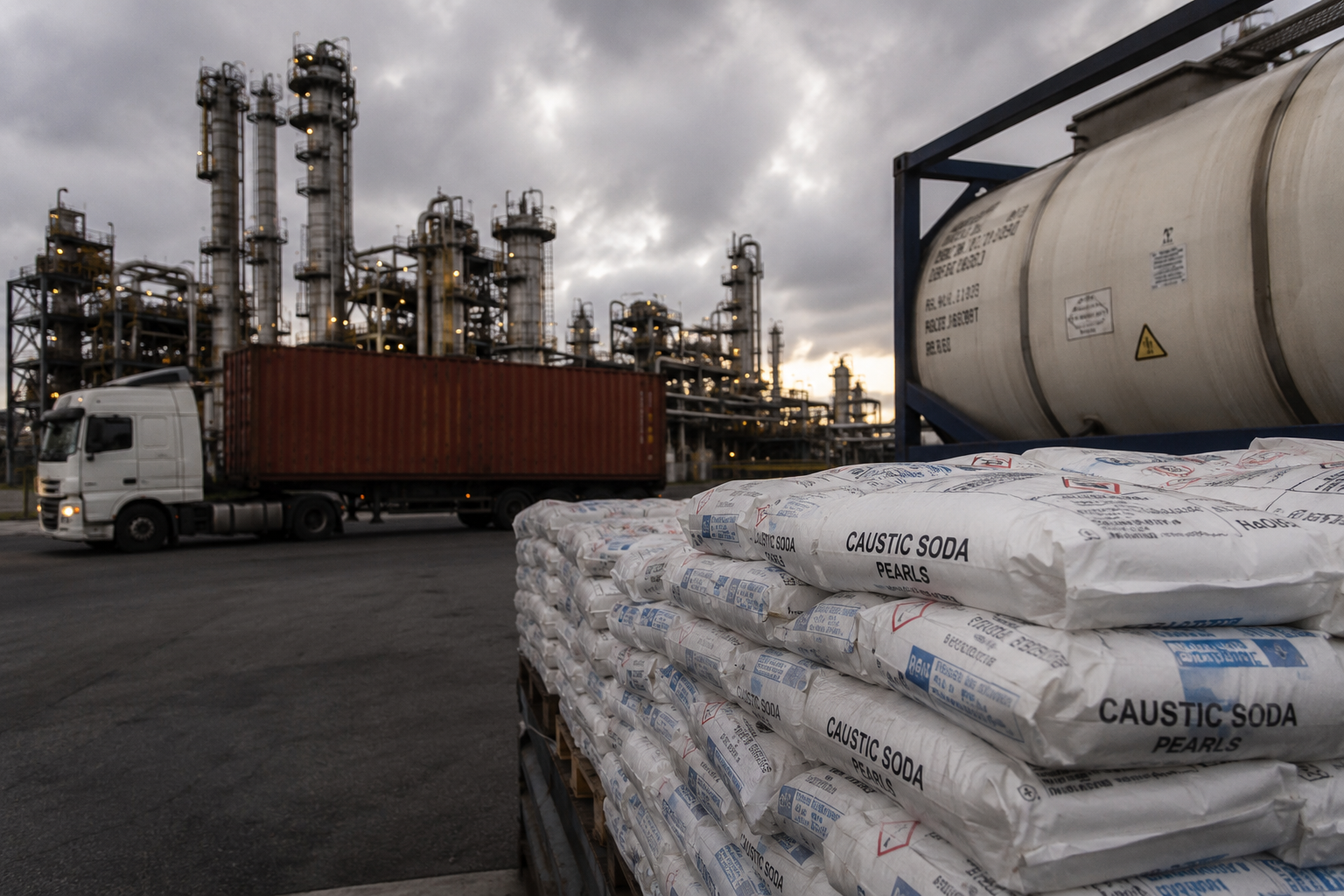
Caustic Soda Pearls
Caustic soda pearls are small spherical granules produced through specialized manufacturing processes.
Advantages include:
- Uniform particle size
- Low dust generation
- Improved handling characteristics
- Suitable for precision industrial applications
Industries requiring controlled dosing often prefer pearls over flakes.
Solid Caustic Soda
Solid blocks or cast caustic soda are used in specific industrial operations where large-volume consumption occurs.
Applications include:
- Heavy chemical processing
- Metallurgical operations
- Specialized manufacturing sectors
Liquid Caustic Soda
Liquid caustic soda is typically available in concentrations such as:
- 32% NaOH
- 45% NaOH
- 50% NaOH
Common applications include:
- Water treatment facilities
- Pulp and paper production
- Large-scale industrial plants
Liquid products eliminate dissolution requirements but require specialized storage and transportation systems.
Key Caustic Soda Quality Standards
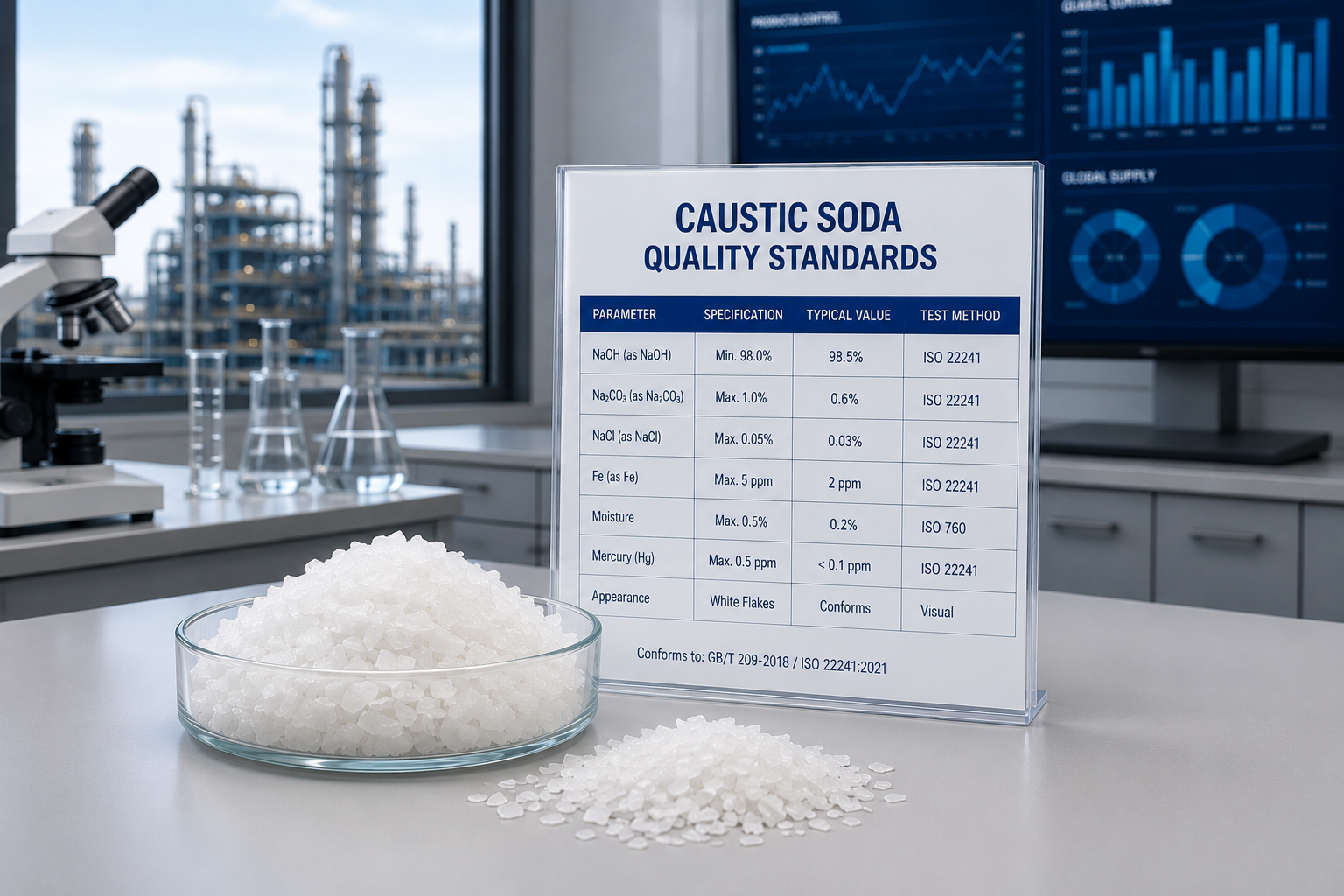
Purity (NaOH Content)
Purity is the most important quality indicator for caustic soda.
For export-grade caustic soda flakes and pearls, buyers commonly expect:
| Specification | Typical Value |
| Sodium Hydroxide (NaOH) | 98.0% – 99.0% Min |
| Sodium Carbonate (Na₂CO₃) | ≤ 0.5% |
| Sodium Chloride (NaCl) | ≤ 0.03% |
| Iron (Fe) | ≤ 20 ppm |
Higher purity levels generally provide:
- Better production efficiency
- Lower impurity introduction
- More predictable chemical reactions
- Reduced waste generation
Industrial buyers often request Certificates of Analysis (COA) to verify purity before shipment.
Moisture Content
Caustic soda is highly hygroscopic, meaning it readily absorbs moisture from the atmosphere.
Moisture content affects:
- Product concentration
- Storage stability
- Shelf life
- Transportation efficiency
For high-quality caustic soda flakes and pearls, moisture content is generally maintained at very low levels to preserve effective NaOH concentration.
Excess moisture may indicate:
- Improper storage
- Packaging failure
- Reduced product quality
This is why reputable suppliers use moisture-resistant packaging and controlled warehouse conditions.
Sodium Carbonate (Na₂CO₃)
Sodium carbonate forms naturally when caustic soda reacts with carbon dioxide in the air.
Lower sodium carbonate content is generally preferred because it indicates:
- Higher product purity
- Better manufacturing controls
- Improved chemical performance
Many industrial applications specify maximum carbonate limits as part of procurement requirements.
Sodium Chloride (NaCl)
Chloride content is another important quality parameter.
Low sodium chloride levels are particularly important for:
- Chemical manufacturing
- Textile processing
- Electronics-related applications
- High-purity industrial processes
Consistent chloride specifications help maintain product quality and process reliability.
Iron Content
Iron contamination can affect sensitive industrial processes and finished products.
Low iron content is especially important for:
- Textile manufacturing
- Water treatment chemicals
- Specialty chemicals
- High-purity industrial applications
Export-grade caustic soda typically maintains strict iron limits to meet international market requirements.
Typical Export Specifications for Caustic Soda Flakes
While specifications may vary by producer and destination market, a typical export-grade product may include:
Chemical Specifications
- NaOH: 99.0% Min
- Na₂CO₃: 0.5% Max
- NaCl: 0.03% Max
- Fe: 20 ppm Max
Physical Specifications
- White flakes
- Rapid water solubility
- Low moisture content
- Free-flowing appearance
Buyers should always verify current specifications through the latest COA before purchase.
Packaging Standards for International Trade
Packaging quality is a major consideration for importers purchasing bulk caustic soda.
Common packaging options include:
25 kg Bags
Most widely used export format:
- PP woven bags with PE liner
- Moisture-resistant construction
- Easy palletization
Jumbo Bags (FIBC)
Suitable for large-volume industrial consumers:
- 500 kg bags
- 1,000 kg bags
- Reduced handling costs
Bulk Tank Transportation
Used primarily for liquid caustic soda:
- ISO tanks
- Chemical tank trucks
- Dedicated bulk storage systems
Proper packaging protects product integrity throughout international transportation and storage.
Documentation Buyers Expect
Professional procurement teams typically require complete documentation before approving a supplier.
Certificate of Analysis (COA)
The COA confirms:
- Purity levels
- Moisture content
- Chemical composition
- Batch-specific test results
Material Safety Data Sheet (MSDS/SDS)
The safety documentation provides:
- Hazard information
- Handling procedures
- Storage requirements
- Emergency response guidelines
Export Documentation
For international shipments, buyers commonly request:
- Commercial Invoice
- Packing List
- Certificate of Origin
- Bill of Lading
- Quality Certificates
Reliable caustic soda export suppliers maintain comprehensive documentation systems to support smooth customs clearance and regulatory compliance.
What Bulk Buyers Look for in a Caustic Soda Supplier
Selecting the right supplier involves more than evaluating price alone.
Experienced buyers often assess:
Consistent Product Quality
Reliable suppliers deliver uniform specifications across every shipment, reducing operational risk and quality concerns.
Production and Supply Capacity
Large industrial consumers require dependable supply chains capable of supporting long-term purchasing programs.
Export Experience
International trade expertise helps ensure:
- Proper documentation
- Efficient logistics
- Compliance with destination-country regulations
- On-time delivery performance
Technical Support
Professional suppliers assist customers with:
- Product selection
- Specification reviews
- Regulatory documentation
- Shipping requirements
Packaging Flexibility
Different industries require different packaging formats. Suppliers with multiple packaging options can better support diverse customer needs.
Conclusion
Understanding caustic soda quality standards is essential for manufacturers, distributors, and industrial buyers seeking reliable raw material supply. Key factors such as NaOH purity, moisture content, sodium carbonate levels, chloride content, iron content, packaging quality, and documentation all contribute to product performance and supply reliability.
As global demand for industrial caustic soda continues to grow, partnering with an experienced caustic soda supplier becomes increasingly important. Buyers should prioritize suppliers that offer consistent quality, complete technical documentation, strong logistics capabilities, and proven caustic soda export experience.
For organizations sourcing bulk caustic soda for industrial applications, careful evaluation of quality standards helps ensure operational efficiency, regulatory compliance, and long-term supply security.
Contact us for bulk supply.
Request specifications and pricing.
Inquire about export availability.
about
Raykan
Together, let’s shape the future of industry. Focused on Reliability, Quality & Value