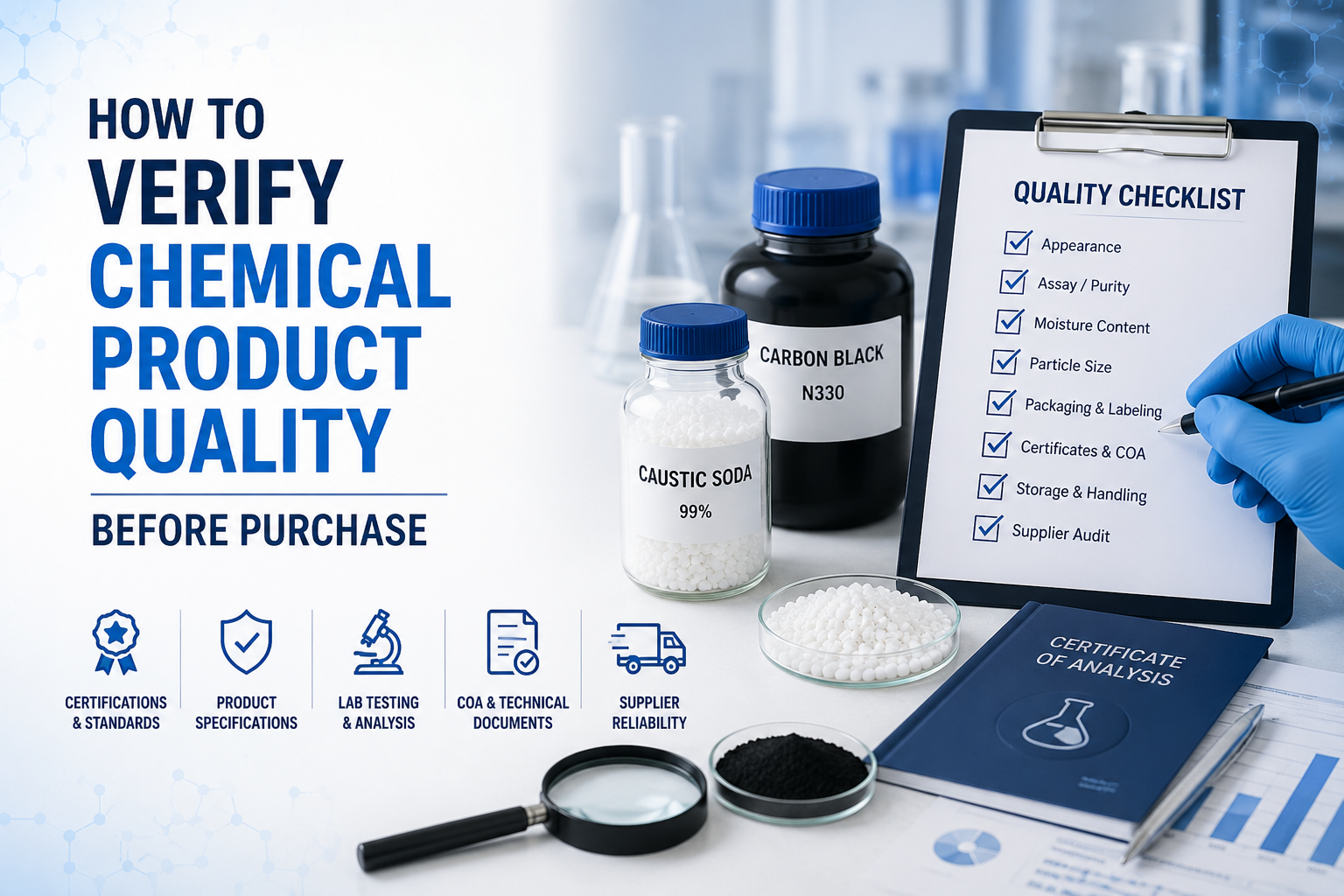
In global industrial trade, purchasing chemicals is not only about price and availability. Product quality directly affects manufacturing performance, regulatory compliance, operational safety, and long-term business reliability. Whether you are sourcing solvents, industrial acids, specialty additives, or raw materials for manufacturing, verifying chemical quality before purchase is essential.
For importers, procurement managers, distributors, and manufacturers, understanding how to assess supplier credibility and product consistency can reduce operational risks and protect supply chain stability.
This guide explains the key steps buyers should take to verify chemical product quality before placing bulk orders.
Review the Product Specification Sheet
The first step in chemical quality verification is reviewing the Technical Data Sheet (TDS) and product specifications.
A professional supplier should provide detailed information including:
Key Parameters to Check
- Purity percentage
- Chemical composition
- Moisture content
- Density and viscosity
- Appearance and color
- pH value
- Shelf life
- Packaging standards
These specifications should match your production requirements and industry standards.
For example, a manufacturer purchasing industrial solvents may require a minimum purity level to ensure stable processing performance.
Request technical specifications before confirming any bulk chemical order.
Request a Certificate of Analysis (COA)
A Certificate of Analysis (COA) confirms the tested characteristics of a specific production batch.
The COA should include:
- Batch number
- Manufacturing date
- Laboratory test results
- Testing methods
- Compliance standards
- Authorized quality control signature
Compare COA Data With TDS
The values shown on the COA should align with the standard ranges listed in the Technical Data Sheet.
Major discrepancies may indicate Inconsistent production, Poor storage conditions, Low manufacturing standards and Product contamination risks.
Reliable chemical suppliers maintain transparent documentation and batch traceability.
Verify Supplier Certifications
Supplier certifications are strong indicators of operational quality and compliance.
Common certifications include:
- ISO 9001
- REACH compliance
- GMP standards
- SGS inspection reports
- HACCP (for food-grade chemicals)
Why Certifications Matter
Certified suppliers usually maintain:
- Documented quality control procedures
- Standardized production systems
- Safer handling processes
- Better export compliance
This is especially important in international chemical trading where regulations differ between countries.
Inquire about available chemical products supported by international compliance documentation.
Evaluate Sample Quality Before Bulk Purchase
Before placing large orders, buyers should request product samples for internal testing.
Laboratory Testing Recommendations
Depending on the application, testing may include:
- Purity analysis
- Solubility tests
- Stability evaluation
- Compatibility testing
- Moisture analysis
- Heavy metal detection
Testing samples in actual production environments helps identify performance issues before committing to full-scale procurement.
Importance of Batch Consistency
Even if a sample passes quality testing, buyers should confirm whether future batches maintain the same specifications.
Ask suppliers about Quality consistency controls, Batch-to-batch variation limits and Raw material sourcing standards
Consistent supply quality is critical for industrial manufacturing operations.
Check Packaging and Labeling Standards
Chemical packaging plays a major role in maintaining product integrity during storage and transportation.
Packaging Inspection Checklist
Verify that packaging includes Proper chemical labeling, Hazard identification, UN packaging standards, Batch numbers, Net weight information and Storage instructions.
Damaged or poorly labeled packaging may indicate weak operational controls.
Proper packaging is especially important for hazardous chemicals and international exports involving long transit times.
Assess Chemical Shipping Methods and Logistics
Product quality can deteriorate if transportation conditions are not properly managed.
Important Chemical Shipping Considerations
Professional suppliers should provide clear information about Temperature-sensitive transport requirements, Container standards, Hazardous cargo handling, Moisture protection, Export documentation, Storage recommendations during transit.
Understanding chemical shipping methods helps buyers minimize contamination and degradation risks during international delivery.
Ask About Supply Chain Reliability
Reliable suppliers should explain Shipping timelines, Warehouse conditions, Inventory availability, Emergency supply capabilities.
Strong logistics management supports uninterrupted industrial production.
Contact us for bulk supply and international shipping support for industrial chemicals.
Verify Regulatory and Import Compliance
Different countries enforce different chemical import regulations.
Before purchasing, confirm that the supplier can provide Safety Data Sheets (SDS/MSDS), Export declarations, Customs documentation, REACH registration (if applicable) and Country-specific compliance records.
Importance of SDS Documentation
The Safety Data Sheet should include Chemical hazards, Safe handling instructions, First-aid measures, Fire-fighting procedures and Environmental precautions.
Incomplete documentation may create import delays or compliance risks.
Evaluate Supplier Reputation and Communication
Supplier reliability is often reflected in communication quality and transparency.
Signs of a Reliable Chemical Supplier
Professional suppliers typically provide:
- Fast response times
- Technical support
- Transparent pricing
- Clear documentation
- Quality assurance procedures
- Long-term supply capability
You may also review:
- Export history
- Industry references
- Client testimonials
- Third-party inspection availability
Reliable communication reduces procurement uncertainty and strengthens long-term partnerships.
Build Long-Term Supplier Relationships
In industrial procurement, stable supplier relationships often deliver greater value than short-term pricing advantages.
Long-term partnerships can improve:
- Supply consistency
- Technical support access
- Pricing stability
- Logistics coordination
- Emergency inventory support
Experienced chemical trading companies understand the importance of quality assurance, compliance, and dependable delivery systems.
Request technical specifications or contact us for bulk supply tailored to your industrial requirements.
Conclusion
Verifying chemical product quality before purchase is a critical step in protecting manufacturing efficiency, regulatory compliance, and operational safety.
Professional buyers should always evaluate Technical specifications, Certificates of Analysis, Supplier certifications, Sample performance, Packaging standards, Chemical shipping methods, Regulatory documentation and Supply chain reliability.
Careful supplier evaluation helps reduce procurement risks and ensures long-term production stability.
For companies sourcing industrial raw materials internationally, working with experienced and transparent suppliers is essential for maintaining product quality and uninterrupted operations.
For inquiries, bulk orders, or product availability, please visit our contact page or inquire about available chemical products from our industrial supply team.
about
Raykan
Together, let’s shape the future of industry. Focused on Reliability, Quality & Value