Carbon black is one of the most widely used industrial raw materials, playing a critical role in enhancing the performance, durability, and appearance of a wide range of products. From tires and rubber goods to plastics, coatings, and inks, this versatile material is essential for manufacturers worldwide.
For importers, distributors, and procurement professionals, understanding the different grades of carbon black—and how they influence product performance—is key to making informed sourcing decisions. This guide provides a clear, commercially focused overview of carbon black grades, applications, and what to look for in a reliable carbon black supplier.
What Is Carbon Black?
Carbon black is a fine black powder produced through the incomplete combustion or thermal decomposition of hydrocarbons. It is primarily composed of elemental carbon and is valued for its:
- Reinforcement properties
- UV protection capabilities
- Electrical conductivity
- Pigmentation strength
Due to these characteristics, industrial carbon black is a foundational material in many global supply chains.
Industrial Applications of Carbon Black
- Rubber and Tire Industry
The largest application of carbon black is in rubber manufacturing, particularly in tires.
- Improves tensile strength and abrasion resistance
- Enhances durability and lifespan
- Provides UV protection and heat dissipation
Grades like N220 and N330 are widely used in tire treads, while N550 and N660 are more common in sidewalls and inner components.
- Plastics Industry
Carbon black is used in plastics for both functional and aesthetic purposes:
- UV stabilization for outdoor applications
- Conductive properties for electronics
- Deep black pigmentation
It is commonly found in packaging films, pipes, cables, and automotive components.
- Coatings and Paints
In coatings, carbon black acts as a high-performance pigment:
- Provides deep black color and opacity
- Improves weather resistance
- Enhances coating durability
It is widely used in industrial paints, automotive coatings, and protective finishes.
- Printing Inks and Toners
Carbon black is essential in ink formulations:
- High tinting strength
- Consistent dispersion
- Strong color stability
Used in newspapers, packaging inks, and laser printer toners.
- Construction Materials
Carbon black is increasingly used in construction applications:
- Asphalt modification for improved durability
- UV protection in roofing materials
- Conductive concrete for specialized infrastructure
Understanding Different Grades of Carbon Black
Carbon black grades are classified based on particle size, structure, and surface area. These properties directly influence performance characteristics such as reinforcement, conductivity, and dispersion.
N220 Carbon Black
- Type: High reinforcement furnace black
- Particle Size: Small
- Key Properties: abrasion resistance, high tensile strength
Applications:
- High-performance tire treads
- Conveyor belts
- Industrial rubber goods
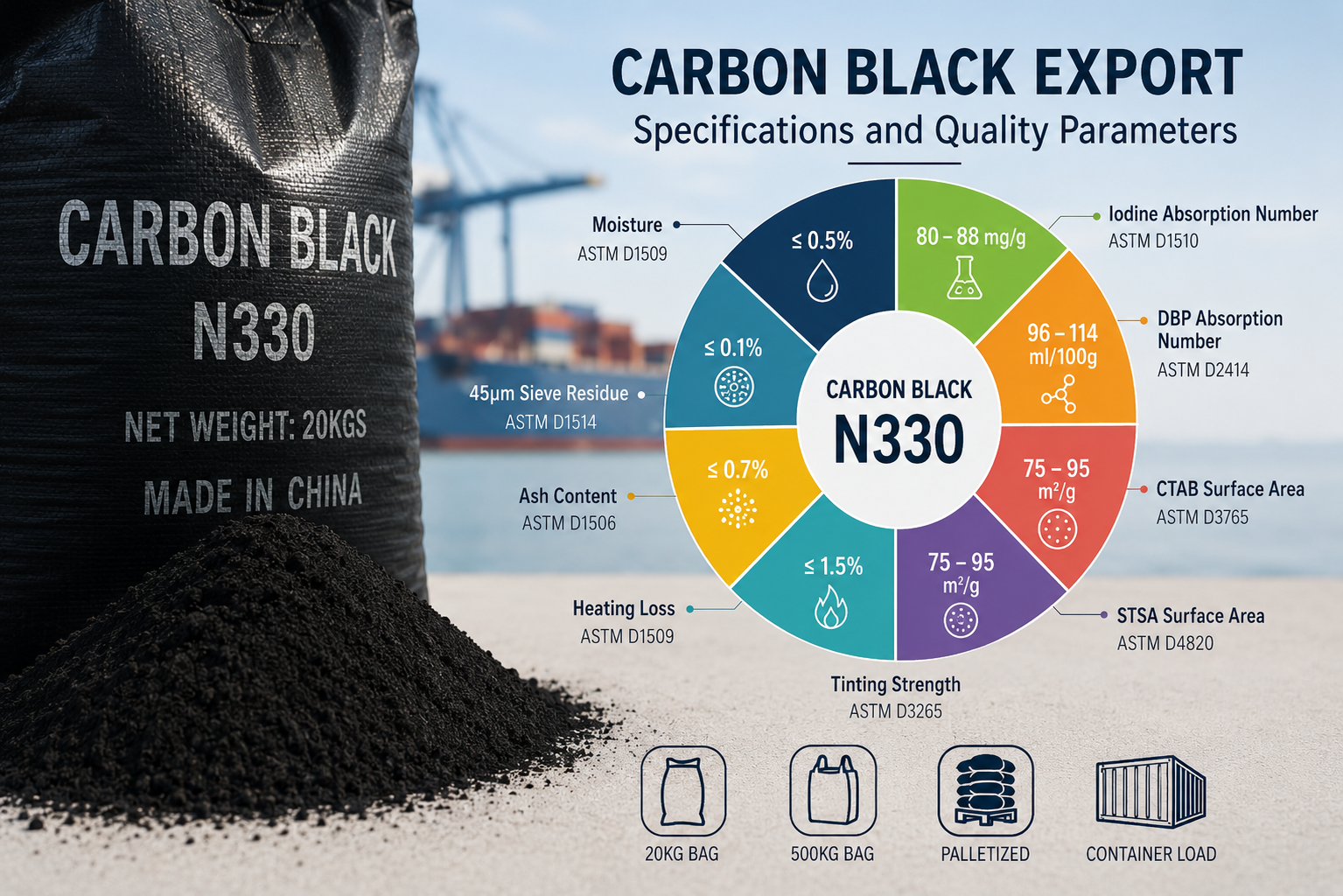
N330 Carbon Black
- Type: Medium reinforcement furnace black
- Particle Size: Medium
- Key Properties: Balanced strength and processability
Applications:
- Passenger car tires
- Rubber hoses
- Extruded rubber products
N550 Carbon Black
- Type: Medium-low reinforcement
- Particle Size: Larger than N330
- Key Properties: Good elasticity and flexibility
Applications:
- Tire sidewalls
- Seals and gaskets
- General-purpose rubber products
N660 Carbon Black
- Type: Low reinforcement
- Particle Size: Large
- Key Properties: Excellent processability, low heat buildup
Applications:
- Inner tubes
- Cushioning rubber components
- Molded rubber goods
Commercial Importance of Carbon Black
Carbon black is a high-demand commodity in global markets due to its essential role in manufacturing and infrastructure development.
Key commercial drivers include:
- Growth in automotive and tire industries
- Expansion of plastic and packaging sectors
- Increasing infrastructure projects worldwide
- Demand for durable and high-performance materials
As a result, sourcing from a reliable carbon black supplier is critical for maintaining production efficiency and product quality.
What Bulk Buyers Look for in Carbon Black
When sourcing bulk carbon black, procurement managers and distributors typically evaluate several key factors:
- Particle Size and Surface Area
These determine reinforcement strength and color intensity. Smaller particles generally offer higher reinforcement and better performance.
- Reinforcement Properties
Different applications require different levels of reinforcement:
- High reinforcement for tires and mechanical rubber goods
- Lower reinforcement for flexibility and ease of processing
- Consistent Quality and Supply
Consistency is essential in industrial production. Buyers look for:
- Uniform batch quality
- Stable supply chains
- Long-term reliability
- Packaging and Logistics
Efficient packaging ensures product integrity and ease of handling:
- Bulk bags (FIBC)
- 25 kg bags
- Customized packaging options
Reliable logistics and export capabilities are equally important for international buyers.
- Documentation and Compliance
Professional suppliers provide complete documentation, including:
- Certificate of Analysis (COA)
- Material Safety Data Sheet (MSDS)
- Technical Data Sheets (TDS)
These documents ensure regulatory compliance and product transparency.
Choosing the Right Carbon Black Supplier
Selecting the right partner for carbon black export is just as important as choosing the right grade. A dependable supplier should offer:
- Wide range of grades (N220, N330, N550, N660, etc.)
- Strong international logistics capabilities
- Competitive pricing for bulk carbon black
- Technical support and product guidance
Working with an experienced supplier helps reduce risk and ensures long-term supply stability.
Global Trade and Supply Opportunities
With increasing global demand, carbon black continues to be a key product in international trade. Importers and distributors benefit from:
- Flexible sourcing options
- Competitive global pricing
- Access to high-quality industrial carbon black
Whether you are sourcing for manufacturing, resale, or distribution, having a reliable export partner is essential.
Conclusion
Carbon black is a cornerstone material across multiple industries, from tires and rubber to plastics and coatings. Understanding the differences between grades such as N220, N330, N550, and N660 allows buyers to optimize performance and cost efficiency in their applications.
For procurement professionals, the focus goes beyond price—quality consistency, technical specifications, and supply reliability are equally critical.
Get in Touch
If you are looking for a trusted carbon black supplier for international trade:
- Explore our product range
- Contact us for bulk supply
- Request technical specifications
- Inquire about available products and export options
Our team is ready to support your sourcing needs with reliable supply, competitive pricing, and professional service tailored to your business.
about
Raykan
Together, let’s shape the future of industry. Focused on Reliability, Quality & Value