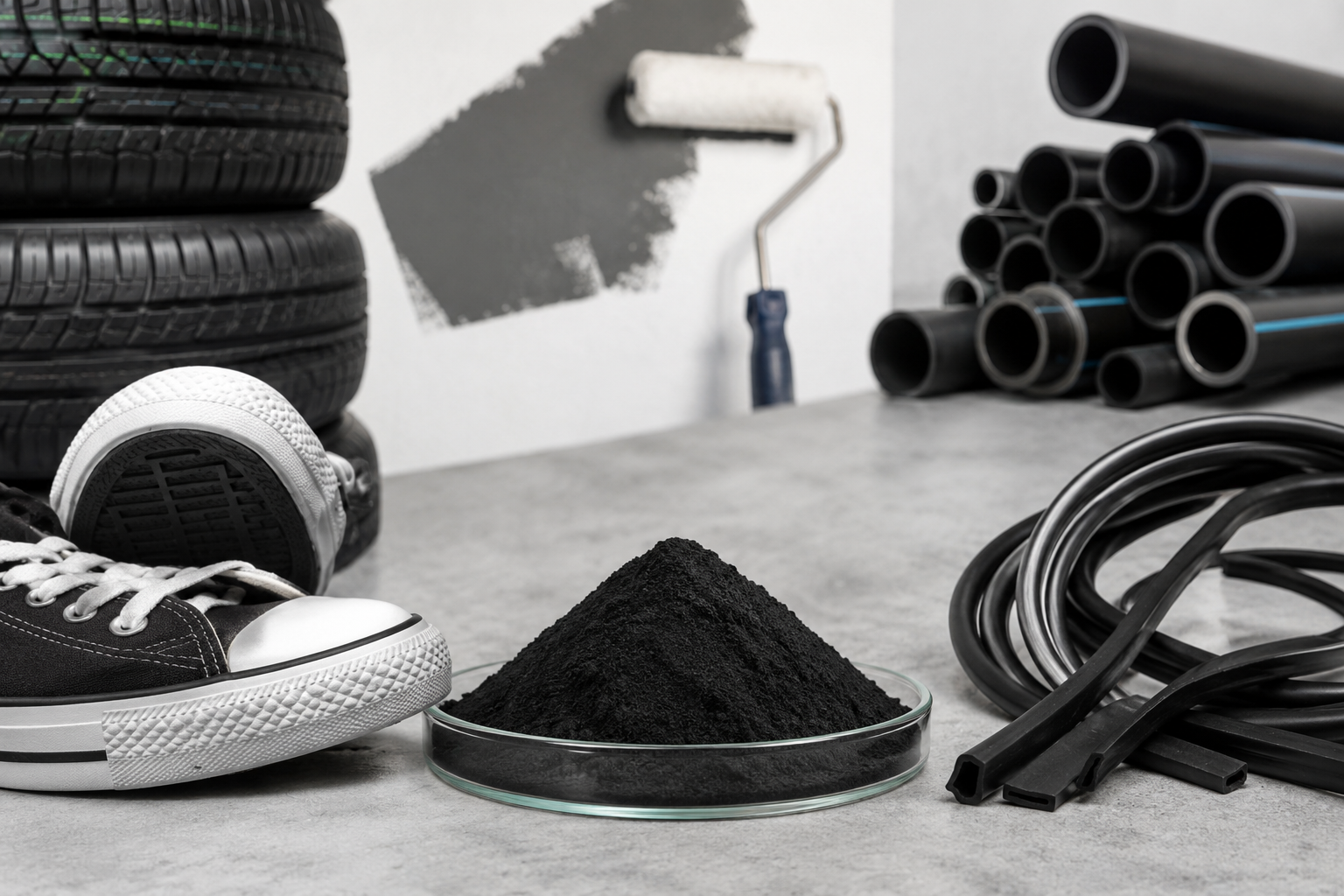
Carbon black is one of the most widely used industrial materials in the global manufacturing sector. From tire production and rubber goods to plastics, coatings, inks, and cables, the right carbon black grade directly impacts product performance, durability, processing efficiency, and cost-effectiveness.
For manufacturers, distributors, and procurement managers, selecting the appropriate carbon black grade is a critical purchasing decision. Understanding the differences between grades such as N220, N330, N550, and N660 helps ensure that finished products meet technical specifications while maintaining production efficiency and market competitiveness.
Why Carbon Black Matters in Industrial Manufacturing
Carbon black is a finely divided form of elemental carbon produced through the controlled incomplete combustion of hydrocarbons. It serves multiple functions across industries, including:
- Reinforcing rubber compounds
- Improving tensile strength and abrasion resistance
- Enhancing UV protection
- Increasing electrical conductivity
- Providing pigmentation and color consistency
- Extending product lifespan
As global demand for automotive tires, industrial rubber products, plastics, and specialty compounds continues to grow, demand for high-quality industrial carbon black remains strong across international markets.
For companies involved in manufacturing and distribution, sourcing from a reliable carbon black supplier ensures consistent product quality, stable supply chains, and dependable technical support.
Understanding Carbon Black Grades
Carbon black grades are primarily classified according to particle size, surface area, structure, and reinforcement characteristics. These properties determine how the material performs in specific industrial applications.
N220 Carbon Black
N220 is a high-reinforcement grade with a relatively small particle size and high surface area.
Key Characteristics
- Excellent abrasion resistance
- High tensile strength
- Strong reinforcement properties
- Improved wear performance
Common Applications
- Premium tire tread compounds
- Heavy-duty truck tires
- High-performance rubber products
- Conveyor belts
Manufacturers seeking maximum durability and resistance to wear often choose N220 for demanding applications where product longevity is essential.
N330 Carbon Black
N330 is among the most commonly used grades in the rubber industry due to its balanced performance characteristics.
Key Characteristics
- Good reinforcement
- Excellent processability
- Balanced tensile and abrasion properties
- Cost-effective performance
Common Applications
- Passenger car tires
- Industrial rubber goods
- Hoses
- Gaskets
- Extruded rubber products
When buyers search for carbon black for rubber and tires, N330 is frequently considered the industry standard because it offers an optimal balance between performance and production costs.
N550 Carbon Black
N550 is a medium-reinforcement grade that provides flexibility and processing advantages.
Key Characteristics
- Moderate tensile strength
- Good resilience
- Lower heat buildup
- Improved flexibility
Common Applications
- Tire carcasses
- Sidewalls
- Rubber mats
- Industrial molded goods
Manufacturers often select N550 when flexibility and dynamic performance are more important than maximum abrasion resistance.
N660 Carbon Black
N660 features larger particle sizes and lower reinforcement levels compared with N220 and N330.
Key Characteristics
- Low modulus
- Excellent elasticity
- Good processing characteristics
- Reduced compound hardness
Common Applications
- Inner tubes
- Mechanical rubber goods
- Seals
- Cushioning products
- Automotive components
N660 is commonly used when softness, flexibility, and cost efficiency are key requirements.
Key Factors When Selecting a Carbon Black Grade
Choosing the correct grade involves evaluating both technical and commercial requirements.
Particle Size and Surface Area
Particle size directly influences reinforcement performance.
Generally:
- Smaller particles provide higher reinforcement
- Higher surface area improves strength and wear resistance
- Larger particles offer greater flexibility and easier processing
Applications requiring maximum durability often utilize grades such as N220, while products needing flexibility may benefit from N660.
Reinforcement Requirements
Different industries prioritize different performance characteristics.
Consider:
- Abrasion resistance
- Tensile strength
- Elasticity
- Hardness
- Heat generation
- Fatigue resistance
Understanding the final product requirements helps identify the most suitable carbon black specification.
Processing Performance
Production efficiency is an important consideration for manufacturers.
Carbon black influences:
- Mixing time
- Compound viscosity
- Extrusion quality
- Surface finish
- Energy consumption
Selecting a grade that aligns with existing manufacturing processes can reduce production costs and improve operational consistency.
What Bulk Buyers Look for When Sourcing Carbon Black
Technical specifications are only part of the purchasing decision. Experienced buyers also evaluate supplier capabilities and long-term supply reliability.
Consistent Product Quality
Consistency is essential for industrial production.
Reliable suppliers maintain:
- Stable particle size distribution
- Uniform surface area characteristics
- Consistent reinforcement performance
- Strict quality control systems
Quality consistency helps manufacturers avoid production disruptions and product variability.
Reliable Supply Capacity
For companies purchasing bulk carbon black, uninterrupted supply is critical.
Buyers often evaluate:
- Production capacity
- Inventory availability
- Export experience
- Supply chain resilience
- Delivery performance
A dependable carbon black export partner can help reduce procurement risks and support long-term growth.
Packaging Options
Industrial buyers often require flexible packaging solutions to match operational requirements.
Common packaging formats include:
- 20 kg bags
- 25 kg bags
- Jumbo bags (500–1000 kg)
- Bulk tanker deliveries
The right packaging option can improve handling efficiency and reduce logistics costs.
Documentation and Compliance
International buyers typically require complete documentation to support quality assurance and regulatory compliance.
Important documents include:
Certificate of Analysis (COA)
The COA verifies key product specifications, including:
- Surface area
- Particle size characteristics
- Volatile content
- Ash content
Material Safety Data Sheet (MSDS)
The MSDS provides essential information regarding:
- Safe handling procedures
- Storage requirements
- Transportation guidelines
- Workplace safety measures
Professional suppliers should provide accurate and up-to-date documentation with every shipment.
Global Demand for Carbon Black
The global carbon black market continues to expand due to growth in:
- Automotive manufacturing
- Tire production
- Infrastructure development
- Industrial rubber products
- Plastic and polymer applications
Emerging economies and expanding manufacturing sectors are creating additional demand for industrial carbon black, making reliable sourcing strategies increasingly important for importers and distributors.
As global supply chains become more interconnected, buyers increasingly prefer suppliers capable of supporting international logistics, export documentation, and consistent product availability.
Choosing the Right Carbon Black Supplier
When evaluating a carbon black supplier, consider the following:
- Product quality consistency
- Availability of multiple grades
- Technical support capabilities
- Export experience
- Packaging flexibility
- Documentation compliance
- Competitive pricing
- Long-term supply reliability
A supplier that understands both technical performance requirements and international trade logistics can become a valuable long-term procurement partner.
Conclusion
Selecting the right carbon black grade requires balancing technical performance, manufacturing efficiency, and supply reliability. Grades such as N220, N330, N550, and N660 each offer distinct advantages depending on the application, reinforcement requirements, and production objectives.
Whether you are sourcing carbon black for rubber and tires, industrial rubber goods, plastics, or specialty applications, partnering with an experienced supplier helps ensure consistent quality and dependable supply.
For more information, visit our Carbon Black Product Page and Contact Us Page.
Contact us for bulk supply.
Request technical specifications.
Inquire about available grades and export options.
Our team can assist with product selection, documentation requirements, packaging solutions, and international supply arrangements tailored to your business needs.
about
Raykan
Together, let’s shape the future of industry. Focused on Reliability, Quality & Value