Turkey’s Polymer Exports Bridge Asia and Europe in 2025
Turkey’s polymer exports are gaining unprecedented momentum, transforming the country into a vital bridge between Asian producers and European markets. In the wake of global supply chain shifts and evolving demand, Turkey’s outward-looking trade strategy in petrochemicals and plastics is rewriting regional trade flows. This article dives into how Turkey is leveraging its strategic location, robust industrial base, and savvy market tactics to boost exports of polymers and industrial chemicals. We’ll unpack recent export figures, key trends in Asia and Europe, logistics advantages, and what B2B buyers and suppliers need to know to stay ahead.
Turkey’s Chemical Export Surge and Polymer Focus
Recent data underscores Turkey’s rise as an export powerhouse in chemicals. In 2024, Turkey’s chemical industry achieved $30.8 billion in exports – making it the country’s second-largest exporting sector. Notably, plastics and polymer-based products led the pack with $9.4 billion in exports, outpacing other subsectors. Despite a global market slowdown, Turkish chemical exports grew in 9 of 16 sub-categories, proving the sector’s resilience. This growth is strategic and value-driven: industry leaders emphasize a push for high value-added products and diversification into new markets. The sector has set an ambitious $35 billion export target for 2025, betting on continued momentum in polymers and specialty chemicals.
Such performance cements chemicals (especially polymers) as a locomotive of Turkey’s economy. In fact, chemical goods made up 13.6% of Turkey’s total exports in 2024. The emphasis on polymers is no accident – Turkey’s manufacturers convert imported raw polymers into a wide array of finished plastics, resins, and chemical products, feeding global supply chains. Turkey is currently one of the world’s top polymer importers, a necessity given limited domestic oil & gas feedstock. For example, Turkey was the second-largest importer of polypropylene in 2024 (about 2.4 million tons, behind only China). This massive import volume underscores Turkey’s role as a regional polymer processing hub: it sources raw materials globally and exports value-added plastic goods and chemicals worldwide.
Europe: Key Market Amid Shifting Demand
Europe remains Turkey’s largest export market, and 2024 saw new records in this corridor. Turkish exports to the EU hit $115.1 billion in 2024, thanks in part to the Customs Union that eases trade. Within chemicals, several European countries dominate Turkey’s client list. The Netherlands, a gateway to the EU, is the #1 destination for Turkish chemical exports. Neighbors like Romania (up 35%) and Italy are also top importers, alongside industrial giants Germany, Spain, and the UK. This reflects Turkey’s deep integration in European supply chains – from supplying polymers for EU manufacturers to delivering finished plastic products on short lead times.
However, European demand dynamics are evolving. Economic headwinds and energy costs have kept EU petrochemical demand relatively subdued (forecast ~0.5% growth for 2025) and domestic production in check. Turkish suppliers have felt this: in some cases, European polymer producers reduced export offers to Turkey due to poor margins, preferring to cut run rates rather than sell cheaply. Despite these lulls, Turkey’s proximity and logistics advantage mean it can respond quickly when European buyers need supply. Turkish exporters frequently capitalize on shorter delivery times to Europe – whether by truck under DAP termsfor nearby markets or via quick transits from ports like Istanbul and Mersin. This agility, combined with competitive pricing (aided by a weaker lira), has helped Turkey grab market share when EU producers pull back.
Turkey is also staying ahead of regulatory changes. For instance, the EU’s upcoming Carbon Border Adjustment (carbon tariffs) means Turkish chemical firms are investing in greener processes to maintain their edge in Europe. In short, Europe will continue to be Turkey’s anchor market, but success depends on adapting to EU demand fluctuations and standards. Turkish exporters are monitoring Europe’s needs closely – and when EU demand is soft, they’re ready to pivot excess supply elsewhere.
Expanding into New Markets: Asia, MENA and Beyond
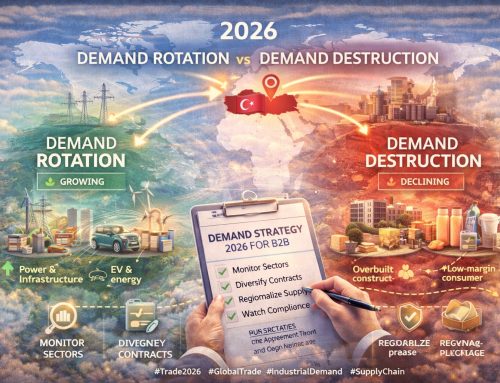
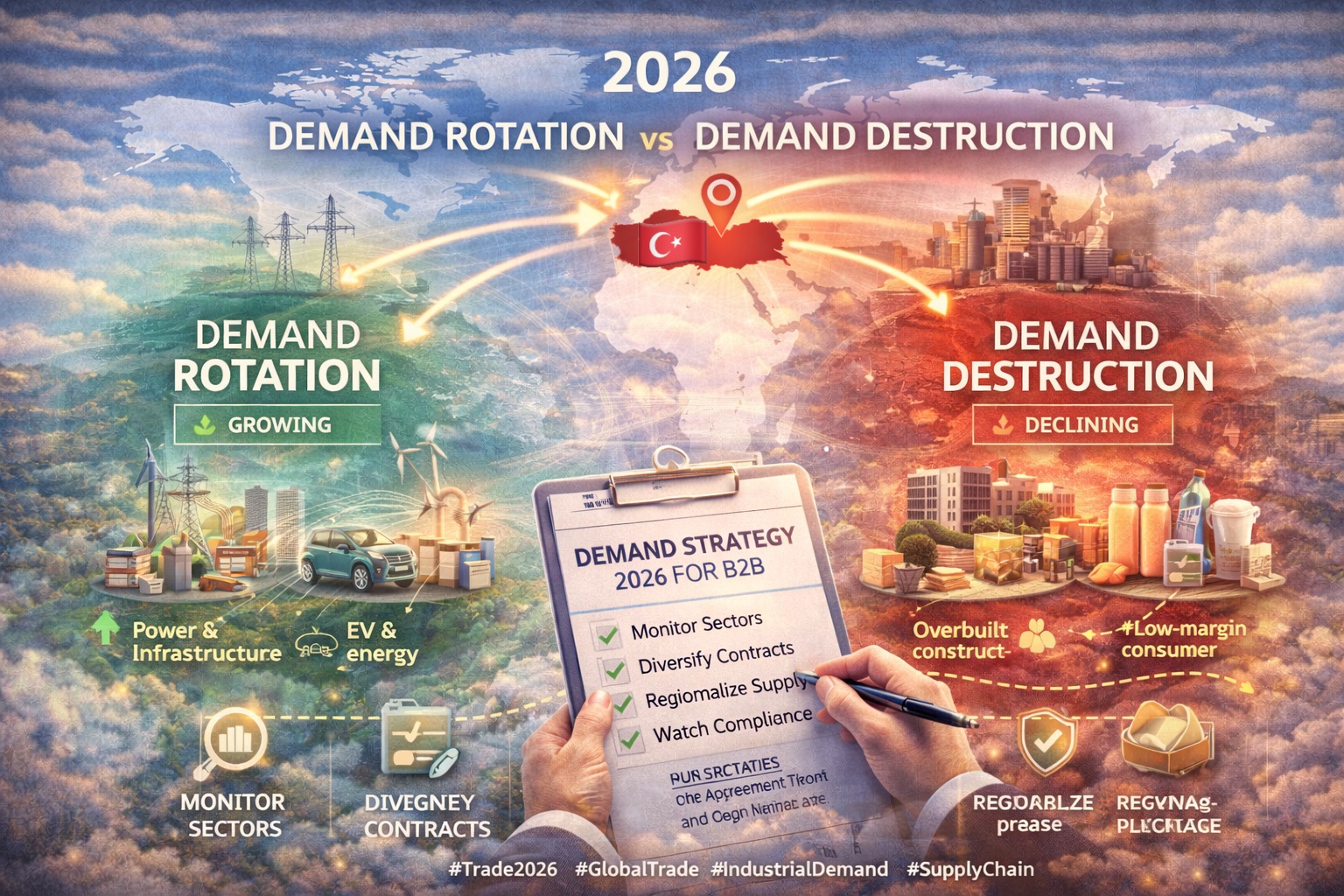
Crucially, Turkey is not putting all its eggs in the European basket. Recent trends show a clear diversification of export destinations. The United States surged into the top three buyers of Turkish chemicals in 2024, with imports up 32%. In the Middle East and North Africa, countries like Egypt (up 60%) and Iraq entered Turkey’s top 10 export markets. This rise of non-traditional markets highlights Turkey’s outward-looking pivot: when one region’s demand slows, Turkey turns to others hungry for materials.
Asia’s emerging economies are a key target. Turkish trade officials have explicitly set sights on high-potential markets such as China, India, and Pakistan to boost exports. While China itself is a manufacturing powerhouse, its import needs for certain polymers (like specialty plastics) present opportunities. India, with its booming plastics consumption, is another bright spot. In fact, industry analysis suggests if European demand remains mediocre, global suppliers (Turkey included) will redirect polymer cargoes to India and Southeast Asia where demand is rising. Turkish manufacturers, facing a slower domestic economy, are eager to offset local slowdowns by exporting more – and Asia’s growth markets are ideal targets.
This strategy is already evident in raw material flows. When China’s import of U.S. polyethylene fell 6% due to new capacity and tariffs, some U.S. polymer found its way to Turkey instead. Through May 2025, Turkey imported over 1.1 million tons of polyethylene (up 4% year-on-year), with the US as the top supplier (266,000 tons, +16%). This glut of affordable resin can fuel Turkey’s export production. Essentially, Turkey is acting as a swap station – taking excess polymers from oversupplied markets and converting them into finished goods for undersupplied ones. By actively engaging suppliers and buyers across continents, Turkey has become a trading hub balancing global polymer demand and supply.
Importantly, Turkish firms are also improving product mix and quality to win over new markets. High-value plastics, customized compounds, and quality-certified products are focal points to meet strict standards in markets like the US and EU. The Istanbul Chemicals Exporters’ Association (IKMIB) has launched a Vision 2030 strategy emphasizing innovation (e.g. a new Chemical Technology Center) to keep Turkish products competitive. This focus on value addition and compliance differentiates Turkey’s exports from cheaper basic materials, helping it stand out in Asia and other regions.
Strategic Location and Logistics: Turkey as a Trade Hub
Geography is Turkey’s inherent advantage in industrial trade. Straddling Europe and Asia, Turkey sits on major trade arteries – and it’s investing heavily to strengthen this position. One flagship initiative is the Trans-Caspian “Middle Corridor” route, which links China to Europe through Turkey. As global supply chains recalibrate around geopolitical risks, this corridor has gained traction as a reliable Asia-Europe land bridge that bypasses Russia. The Middle Corridor’s profile has skyrocketed since 2022, with freight traffic jumping nearly 70–89% over the past two years as some traffic shifts from the traditional Northern (Russia) route. The EU now deems it a strategic alternative for trade, and by 2030 the corridor’s capacity could triple to 11 million tons annually.
Turkey’s role here is pivotal. Dubbed “the most reliable trade route between Asia and Europe,” the Middle Corridor is giving Turkey a historic opportunity to establish itself as a transit and logistics hub for East-West commerce. For Turkish polymer exporters, this means faster and more secure delivery of goods to Far East clients and an ability to import Asian raw materials efficiently. It complements Turkey’s already robust port infrastructure (e.g. Istanbul, Izmir, Mersin ports) and its overland transport links into Europe and the Middle East.
In practical terms, Turkish companies leverage multiple modes: container ships, rail freight, and trucks, optimizing routes based on cost and speed. Many European buyers appreciate Turkey’s short transit times – often just days by road, which supports Just-In-Time supply chain needs for automotive and packaging industries. On the other side, improved rail links through Central Asia mean a Turkish exporter can send chemicals to Western China in around 2–3 weeks, beating maritime transit times. The logistics flexibility also allows Turkish sellers to offer a range of Incoterms to partners. For instance, a supplier might sell FOB from Istanbul to Asian traders (letting them control shipping), but offer CIF or DDP to European clients where door-to-door service is feasible and adds value. This adaptability in delivery and terms enhances Turkey’s appeal as a trading partner amid global shipping uncertainties.
Pricing and Supply Dynamics in 2025
Global pricing trends for polymers in 2025 have been a mixed bag, and Turkish exporters are navigating these shifts carefully. A wave of new petrochemical capacities in Asia (especially China) has put downward pressure on polymer prices worldwide. Weak demand in China and tariff cross-currents have caused oversupply in certain plastics, yielding bargain raw material prices. Turkey has seized this opportunity: ample supply at lower cost allows its manufacturers to keep export prices competitive while protecting margins. In 2024, Turkey’s domestic polymer prices often traded below global averages, reflecting a buyers’ market. While challenging for producers at home, this low-cost base actually enabled Turkish finished products to undercut competitors abroad.
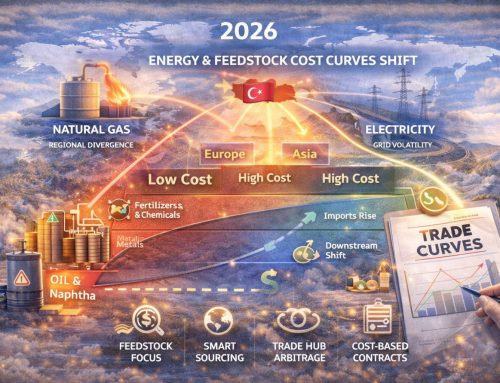
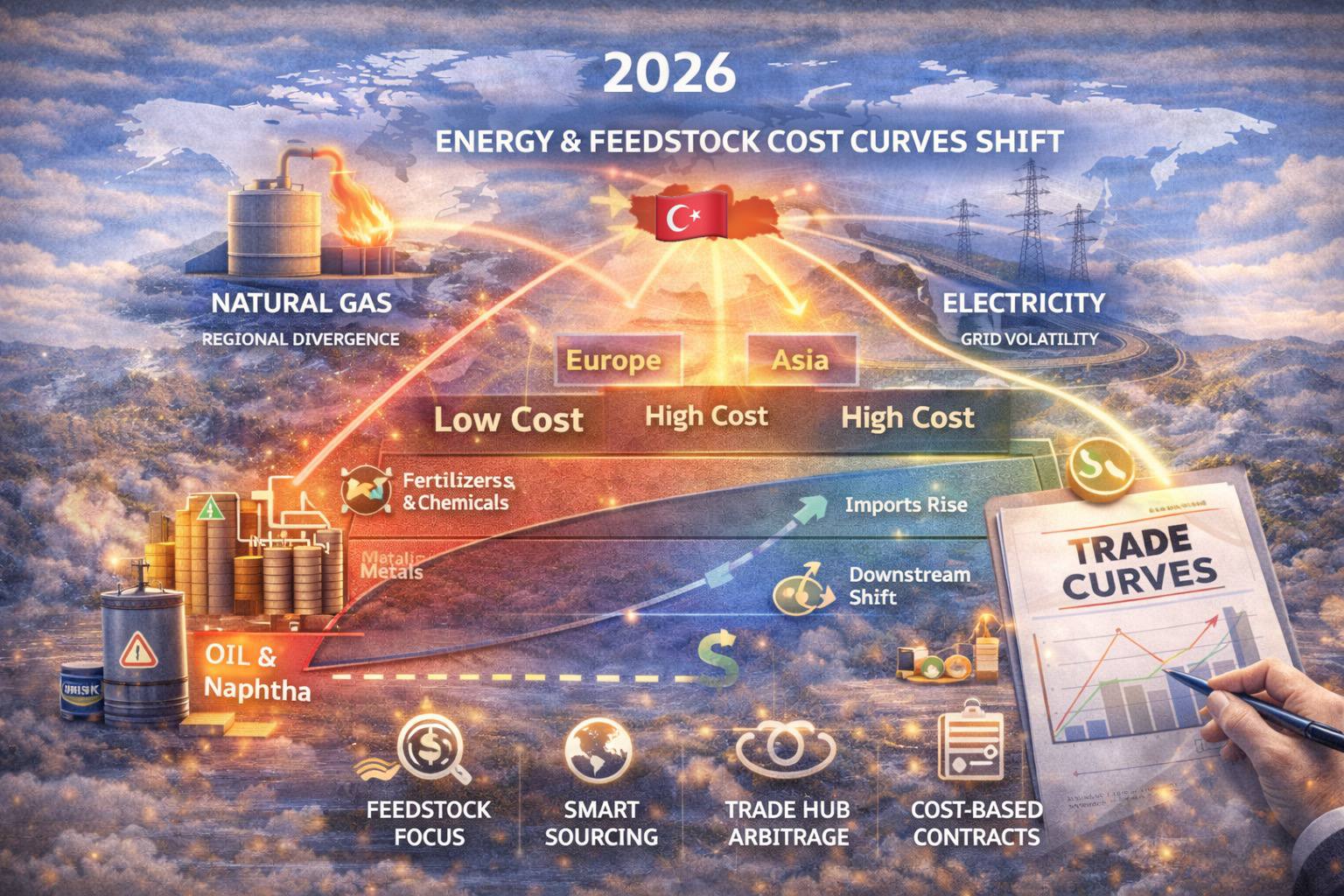
Meanwhile, energy and feedstock costs – critical for polymer pricing – have been relatively favorable for Turkey. Europe’s energy crisis had hit EU petrochemical producers with high costs, but Turkey, benefiting from diversified energy imports (and recent domestic gas discoveries), has managed to keep factories running without the extreme price spikes seen in Europe. Additionally, a depreciated Turkish lira (despite recent stabilization efforts) makes Turkish exports cheaper in dollar/euro terms. International buyers thus find Turkish suppliers offering quality-for-cost advantage, especially in commodity polymers and fertilizers.
However, Turkish exporters are not immune to global challenges. Shipping costs, while down from 2021 highs, remain volatile. Geopolitical uncertainties (e.g. conflicts affecting trade routes or insurance rates) require contingency planning. To address this, many Turkish firms now build flexibility into contracts – e.g. adjusting prices via formulas tied to resin benchmarks or freight indices, and using forward contracts for currency risk management. In addition, suppliers maintain buffer inventories in key markets where possible (for instance, warehousing in Europe) to ensure quick supply and mitigate any logistics disruptions. These tactical moves help Turkish exporters provide reliable service even when markets get choppy.
Conclusion: Outlook and Actionable Insights
Turkey’s emergence as a polymer trade hub between Asia and Europe is a defining trend in the current industrial landscape. The country’s export position is stronger than ever – bolstered by record chemical export values, a widening portfolio of buyer markets, and strategic infrastructure that knits together East and West. For international B2B buyers, this means Turkey is an increasingly attractive source for polymers, plastics, and chemicals, offering a blend of competitive pricing, decent quality, and responsive delivery. Europe’s importers can hedge against local shortages by tapping Turkish suppliers who are eager to grow their EU presence. Asian and Middle Eastern partners, on the other hand, can look to Turkey as both a customer for feedstocks and a provider of finished products, balancing global supply chain equations.
Looking ahead, Turkey is not standing still. Major investments are underway to boost domestic production of petrochemicals – for example, SOCAR Turkey’s planned $7 billion polyolefins project aims to cut Turkey’s import dependence (currently as high as 90% for polyolefins). Within a few years, this could further strengthen Turkey’s export capabilities (and even turn Turkey into a net exporter for certain polymers). Additionally, government and industry bodies are aggressively pursuing trade agreements and participating in international expos to open new doors for exporters.
For buyers and trading partners: now is the time to engage. Keep an eye on Turkey’s polymer price trends and capacity expansions – they can signal attractive procurement opportunities. Leverage Turkey’s flexible logistics by negotiating favorable delivery terms (many Turkish suppliers are open to tailor-made Incoterms to win business). And monitor regulatory changes (e.g. EU carbon rules) that Turkish exporters are adapting to, as this may influence the product mix and certification levels offered.
In summary, Turkey’s outward-looking strategy in petrochemicals is yielding tangible results, connecting Asian supply, Turkish processing, and European demand in a win-win flow. Businesses that align with this trend – whether sourcing from Turkey or partnering in distribution – stand to benefit from a more diversified and resilient supply chain. Turkey’s polymer export boom is here, and it’s reshaping the map of global industrial trade in real time.
about
Raykan
Together, let’s shape the future of industry. Focused on Reliability, Quality & Value